1Adjacent Letters Only
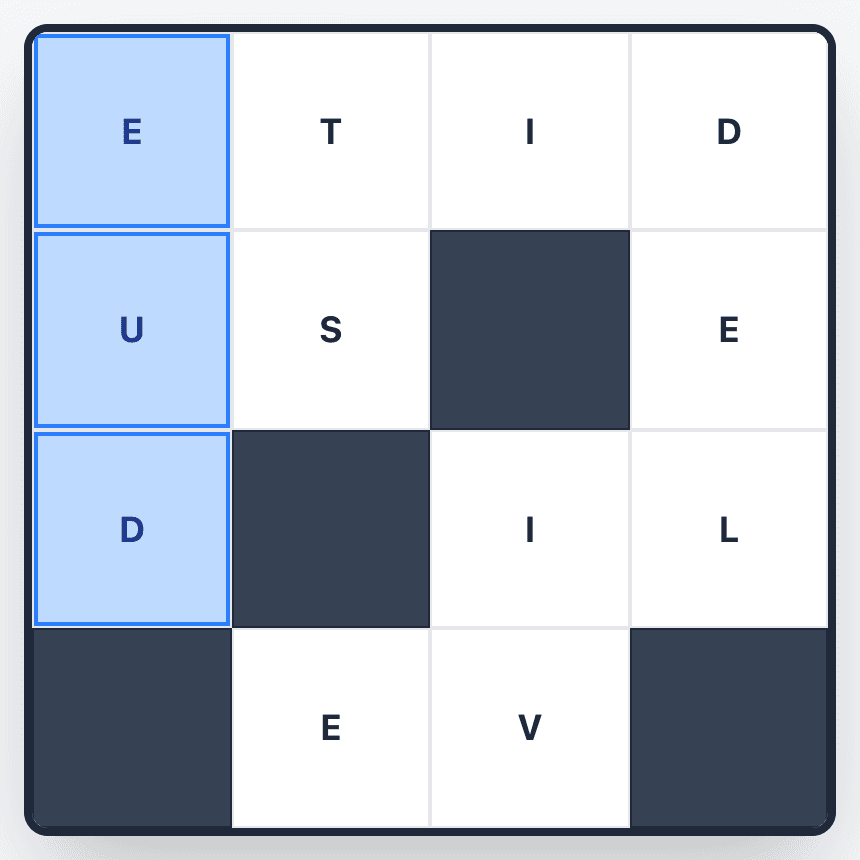
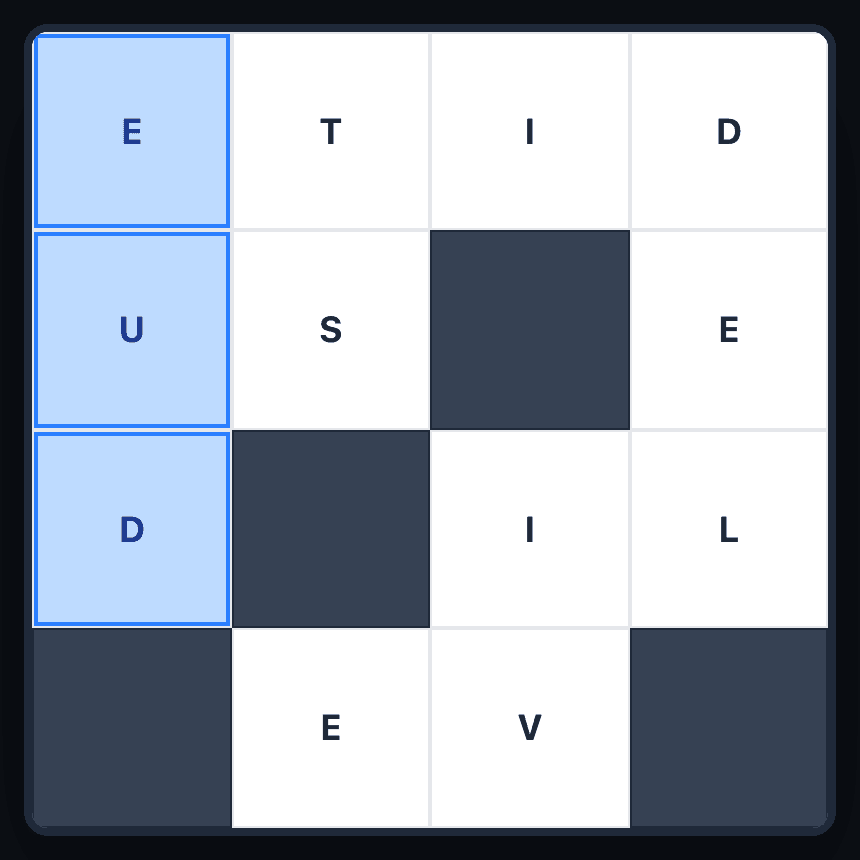
Drag from one letter to the next, moving up, down, left, or right. No diagonals, and no revisiting a letter within the same word.
Every grid hides a set of words. Trace a path through adjacent letters to spell each one, until every letter tile has been used by exactly one word.
Play this board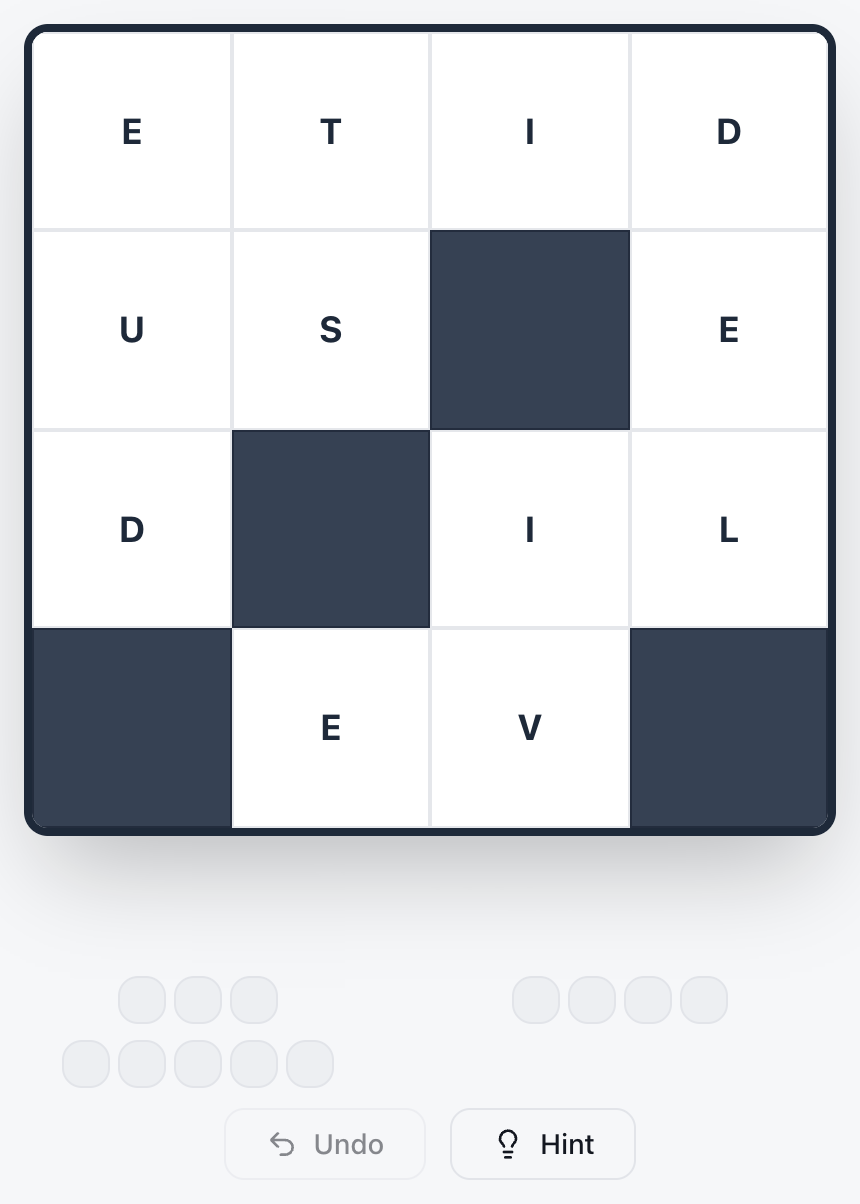
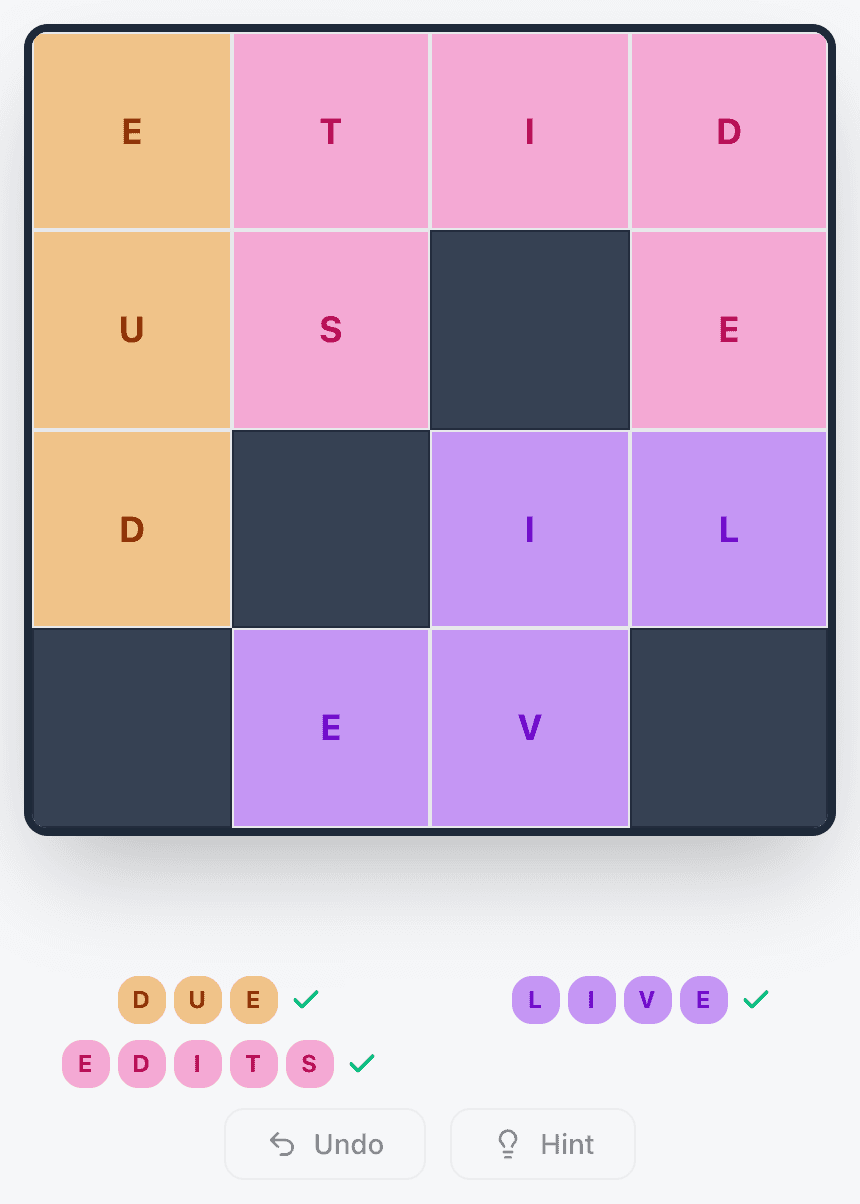
Drag from one letter to the next, moving up, down, left, or right. No diagonals, and no revisiting a letter within the same word.
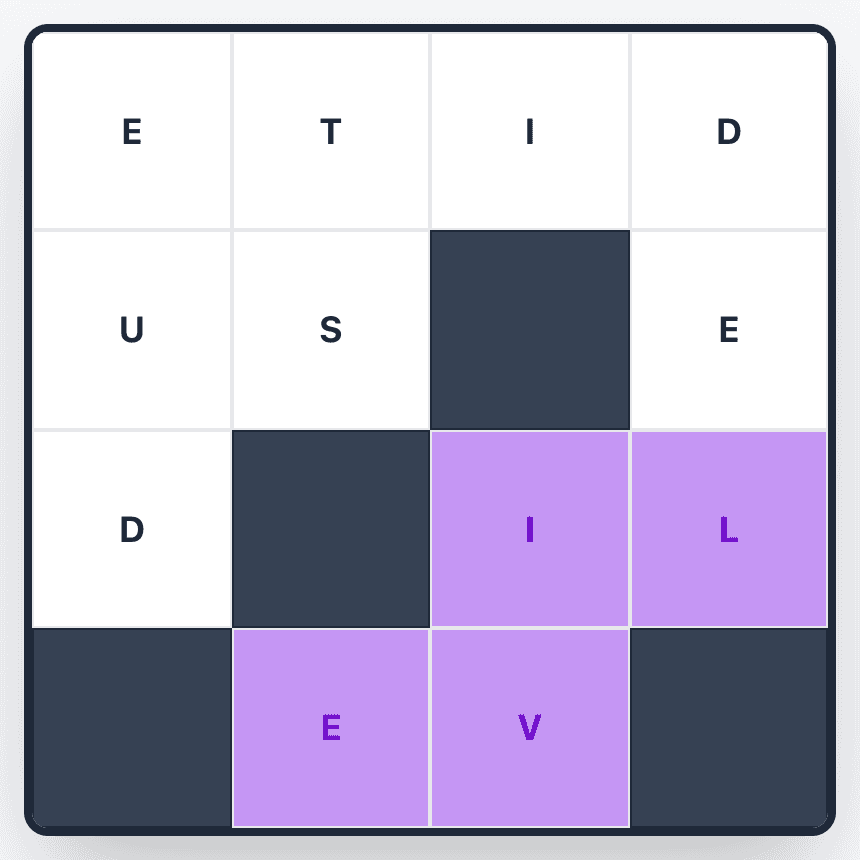
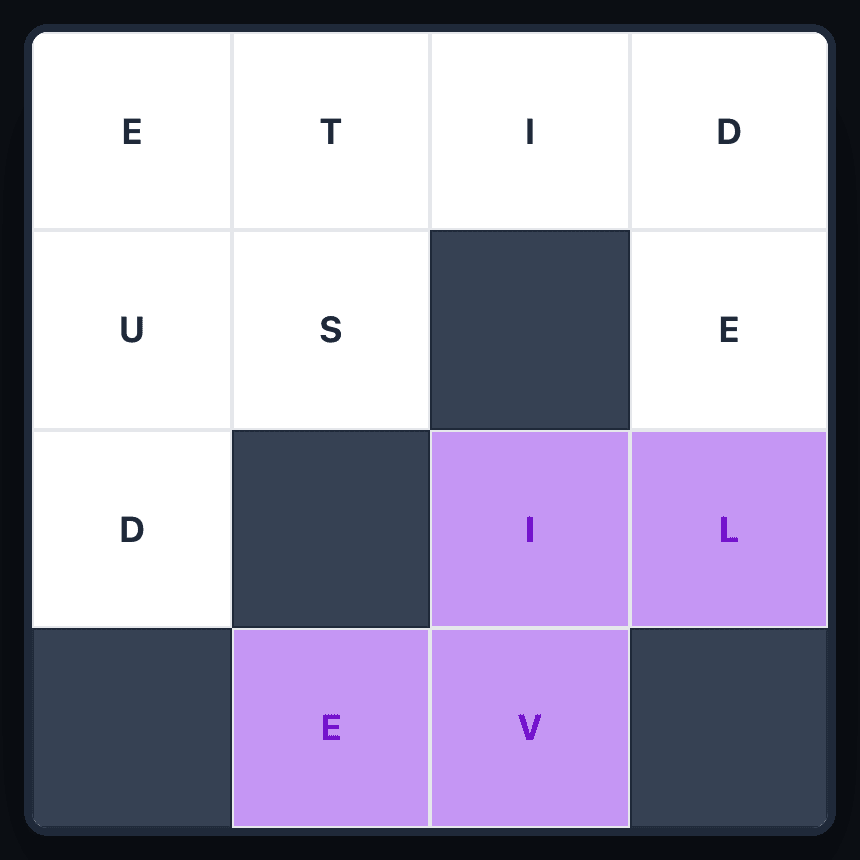
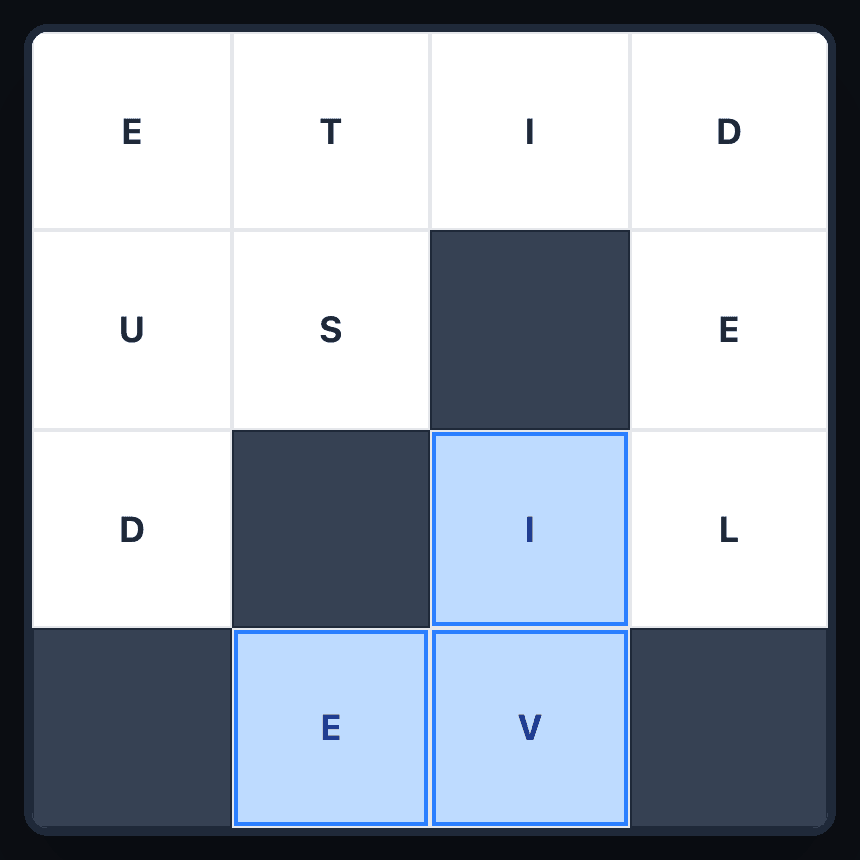
Dark tiles are walls. Your path has to bend around them, the way LIVE turns the corner here. You can never trace through a wall.
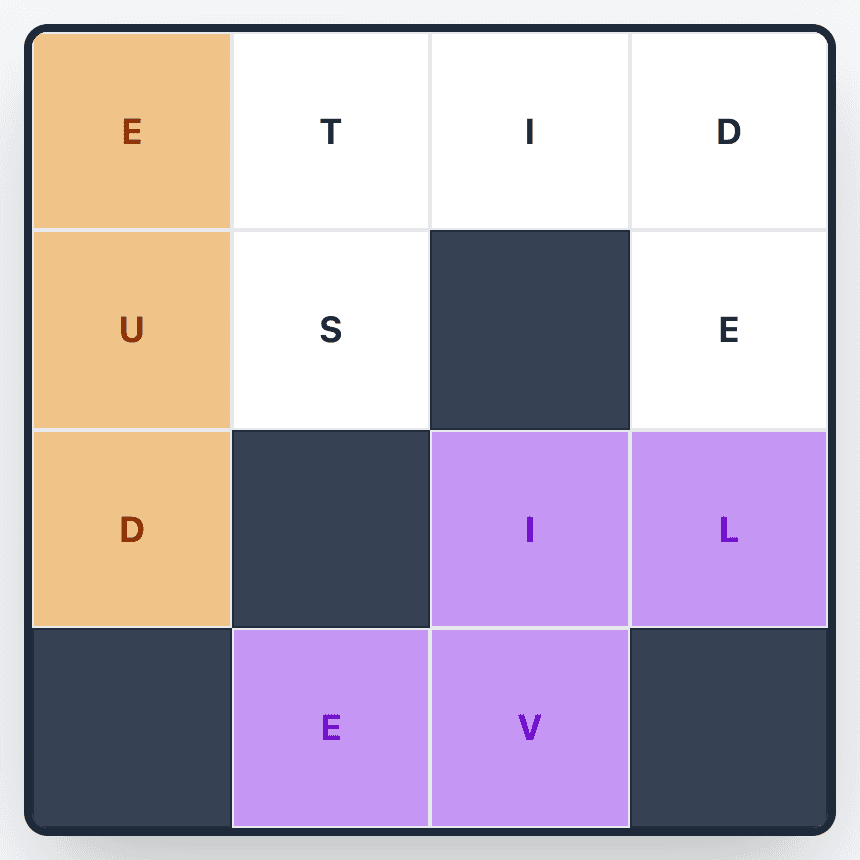
Each letter tile belongs to exactly one word. Two words are placed here, so the five white tiles must spell the last one. You solve the puzzle when no tile is left white.
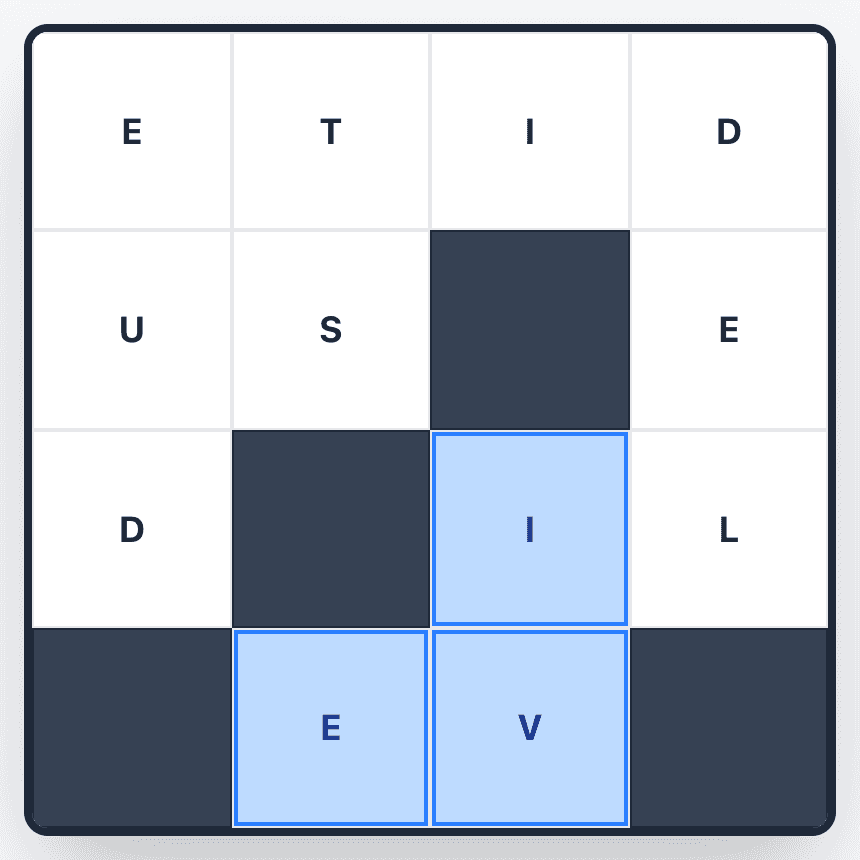
Find the words in whatever order you like, and trace each one from either end. This is LIVE started from its last letter. A word and its reverse are the same path.
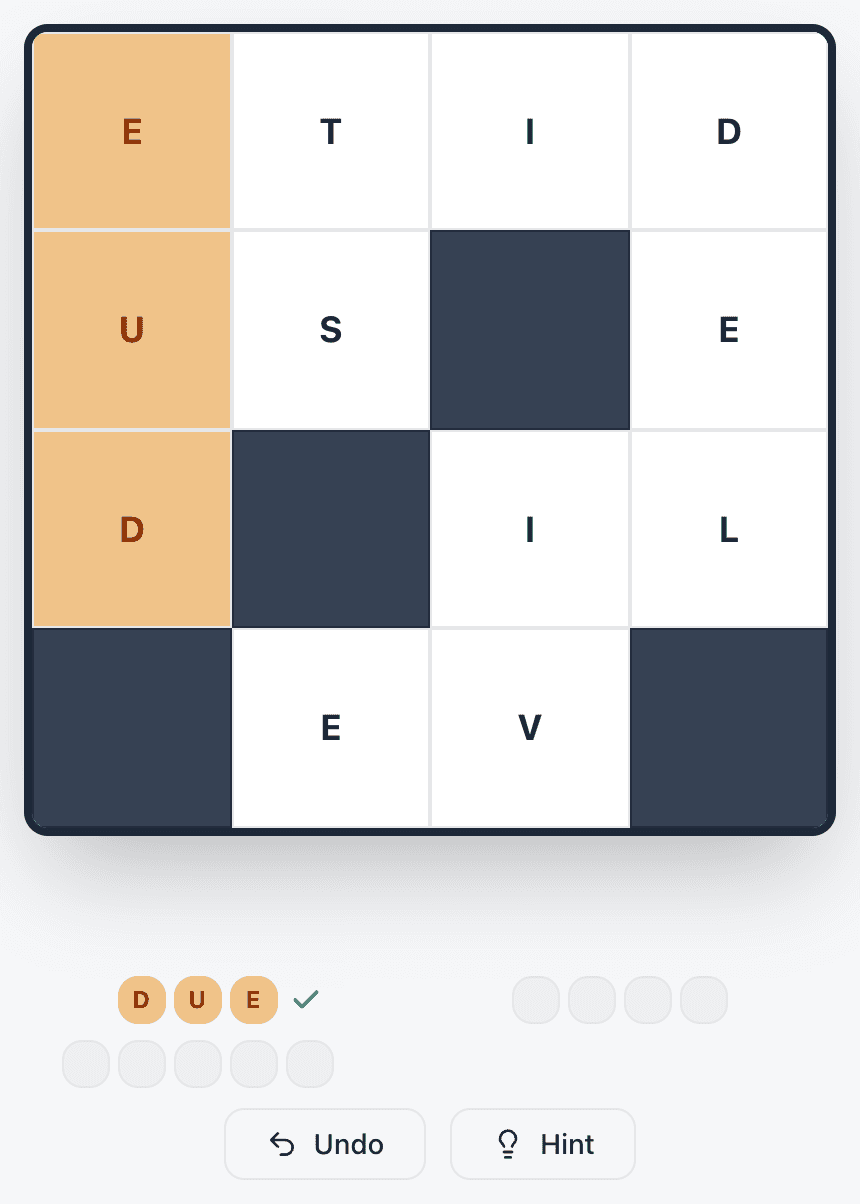
Press on a letter and drag across its neighbours. Let go to submit. A correct word locks in with its own color and fills its slot under the board.
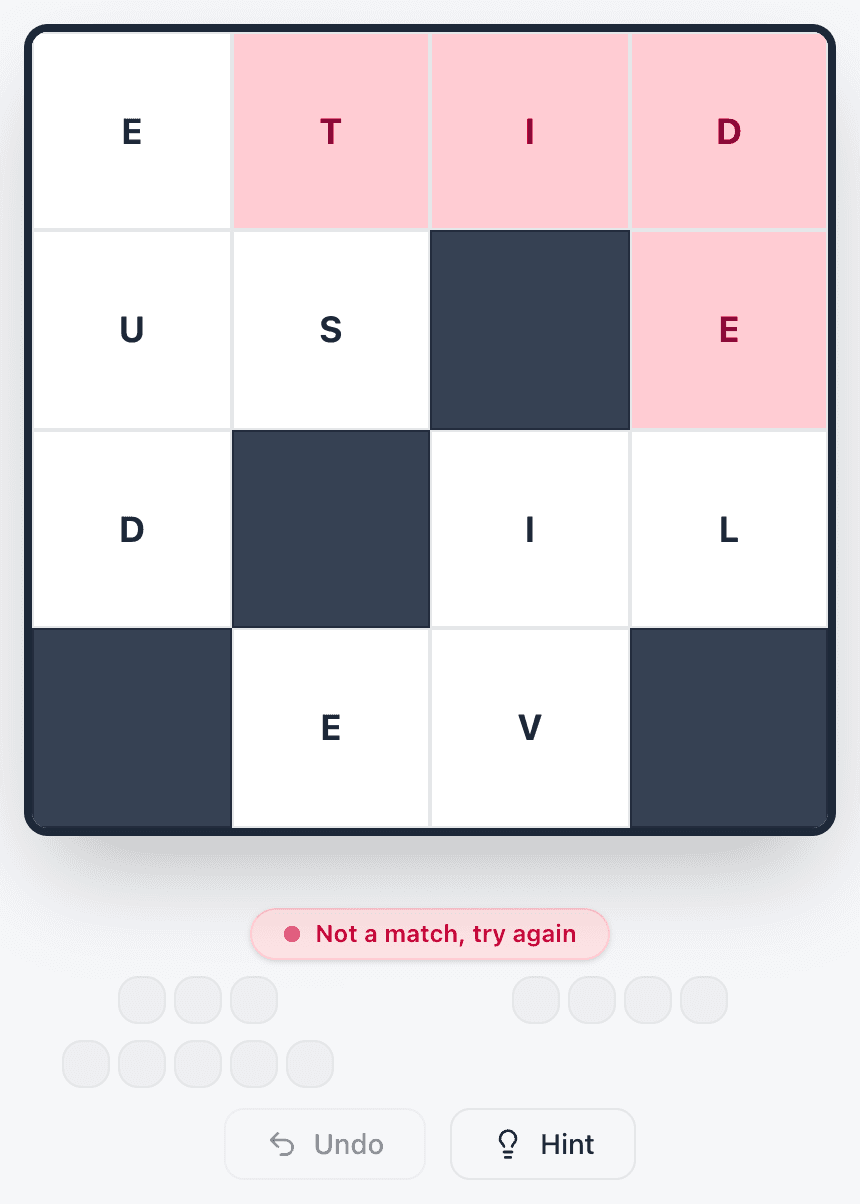
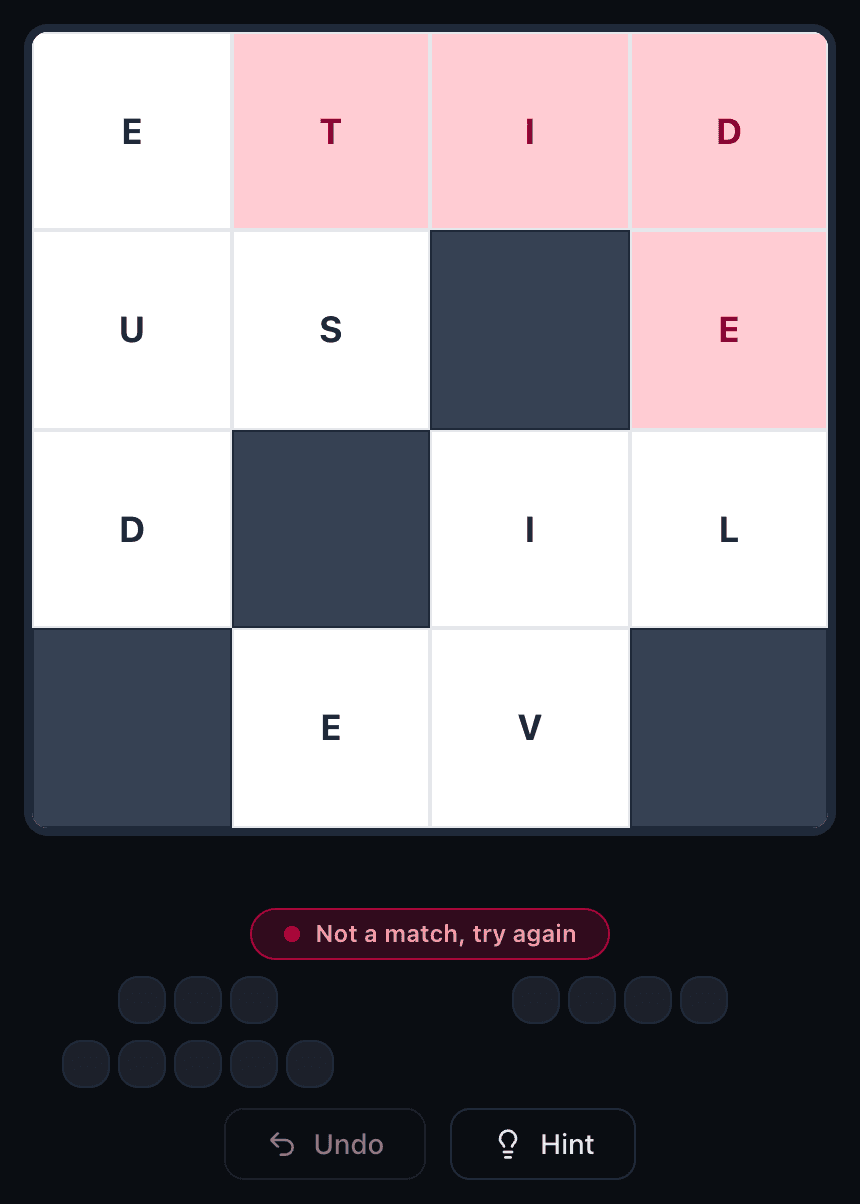
Wend matches the route, not just the spelling. TIDE is a real word, but it is not part of this board, so it flashes red and counts as a mistake.
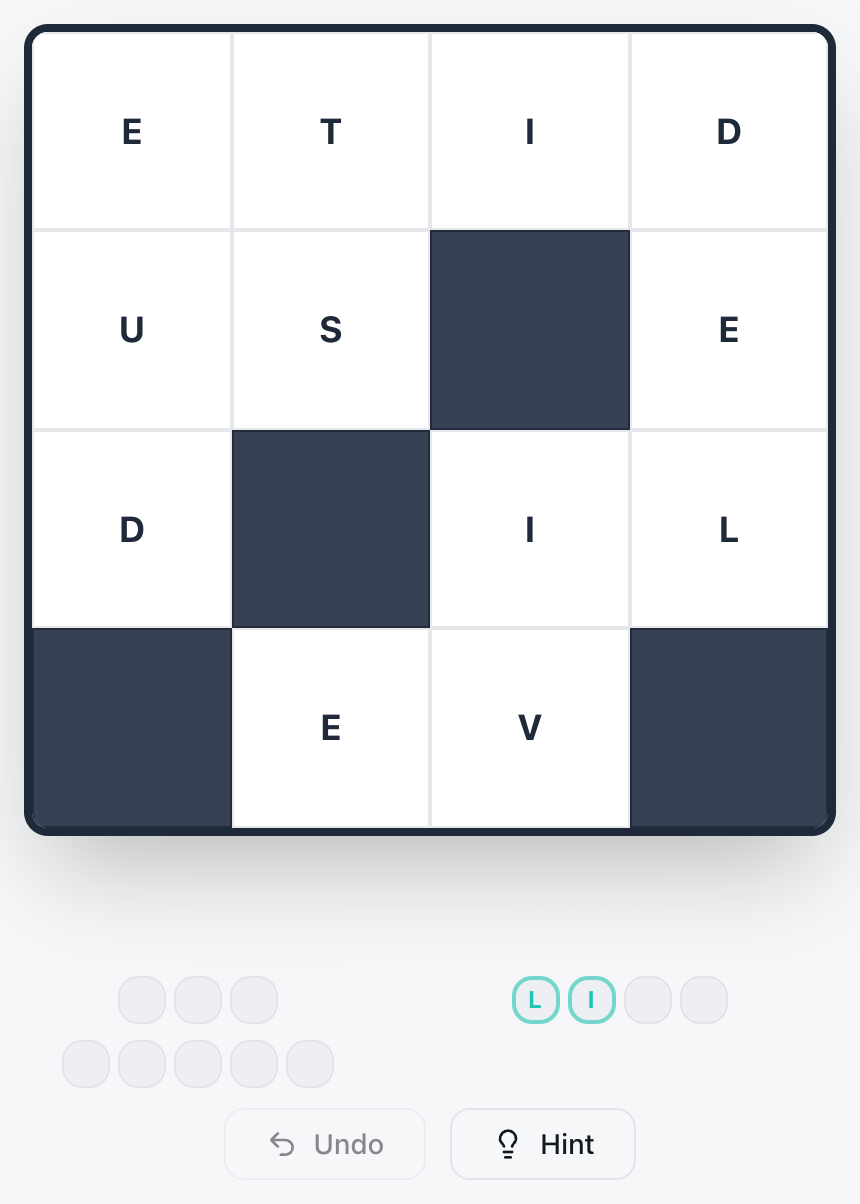
Each tap reveals one more letter of a hidden word in its slot and marks the cell where that word starts on the board.
Undo takes back the word you found most recently. The slots under the board show how many words there are and how long each one is.
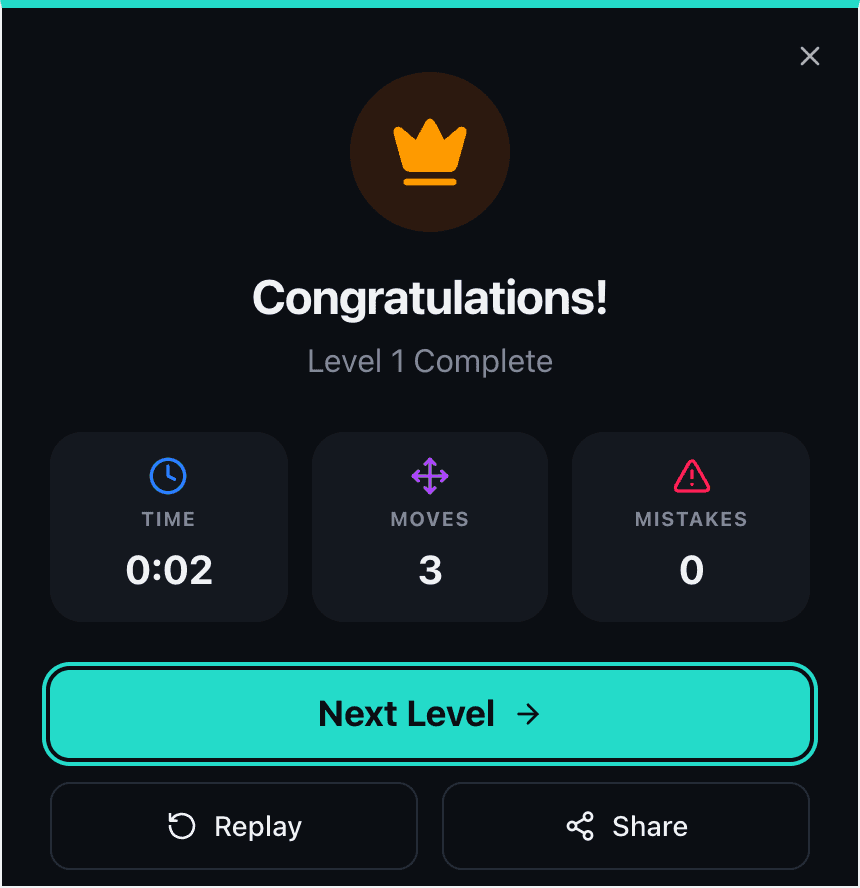
The board is solved the moment every letter tile has a color. You get your time, the number of words you placed, and how many traces were refused, then the next level unlocks.
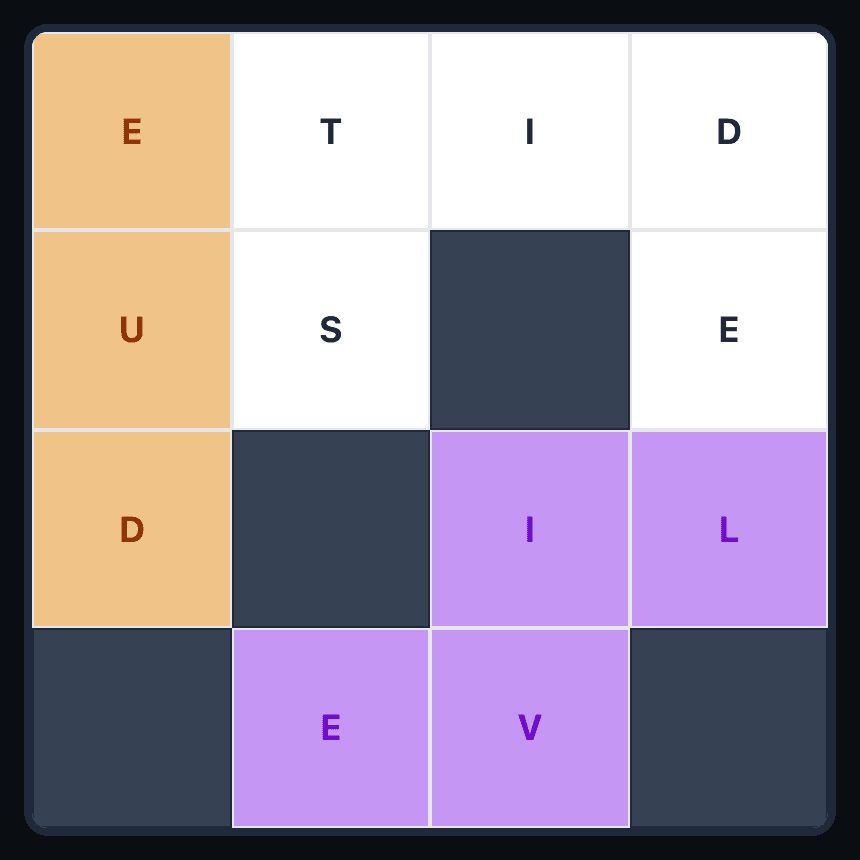
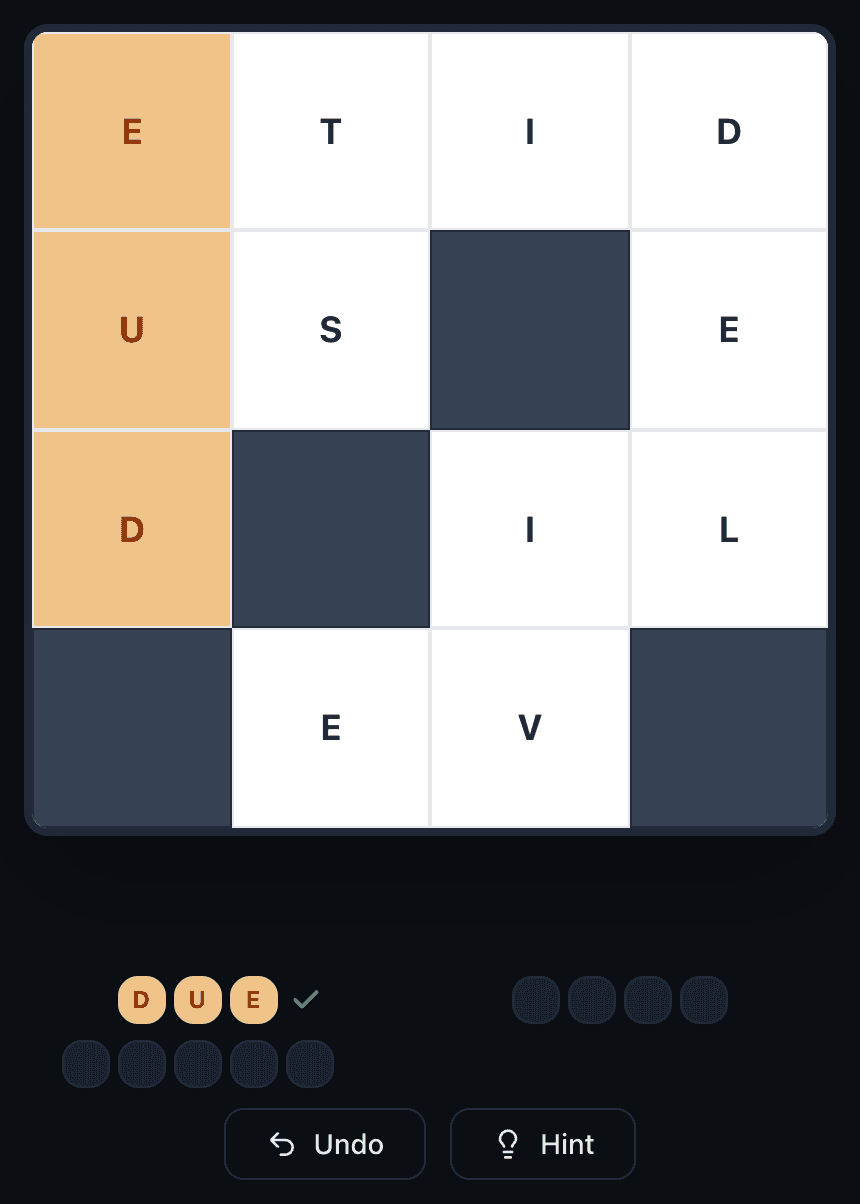
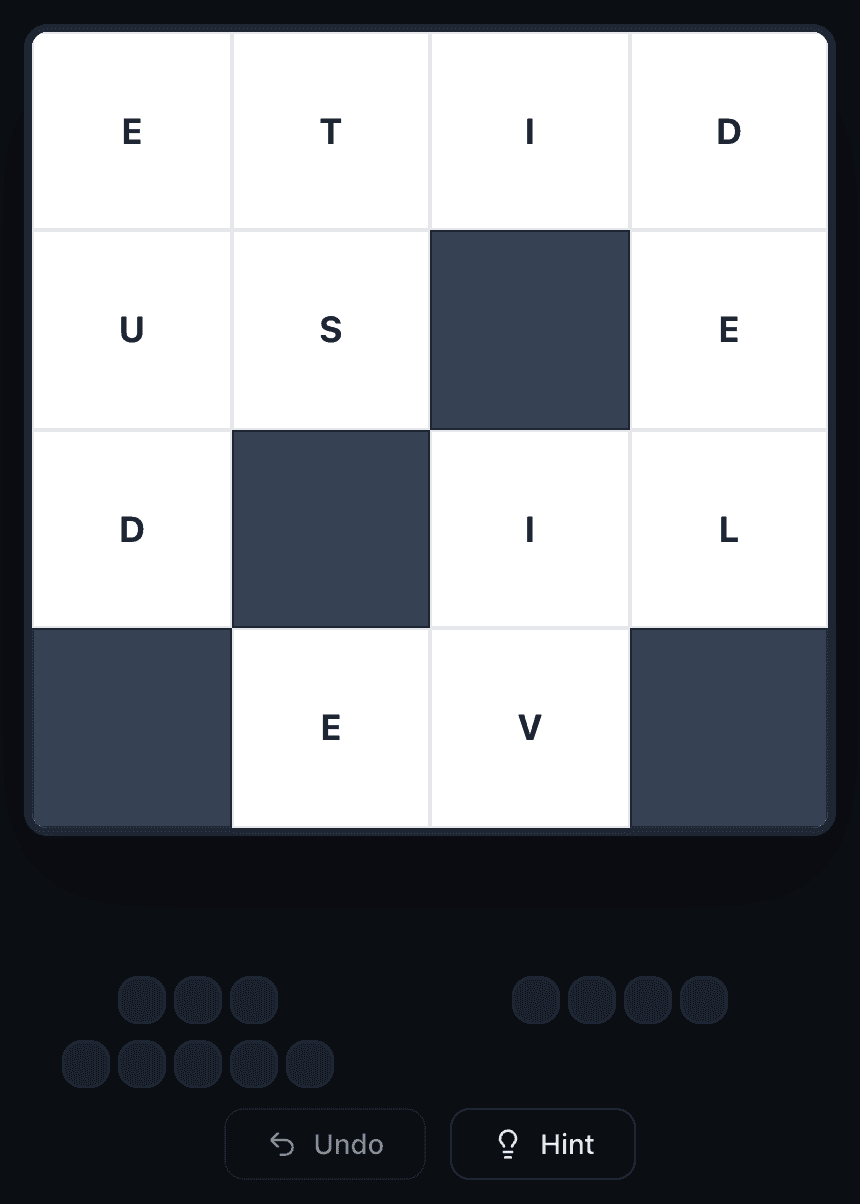
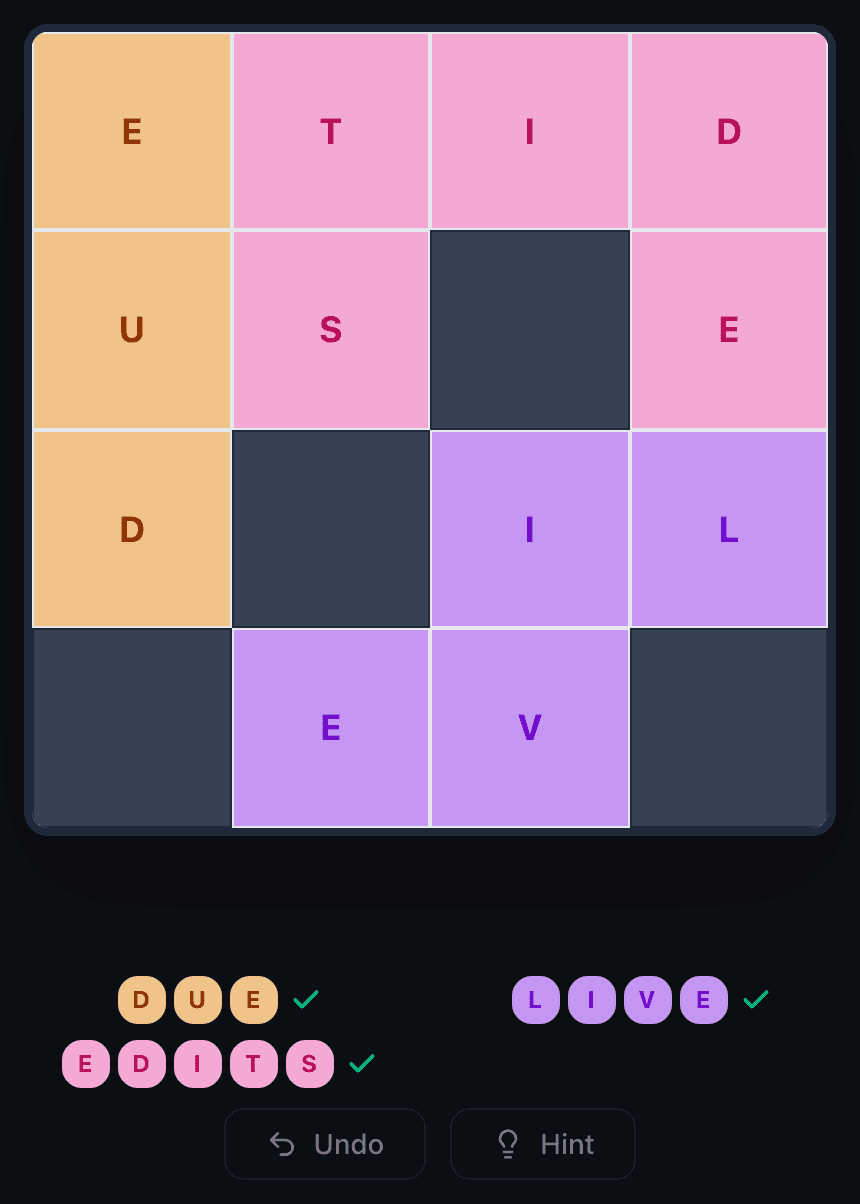
Here is a real board, Novice level 1, solved from start to finish. Every step below is forced, which is the point: a well-made Wend board never asks you to guess. The grid has 4×4 cells, four of them walls, and 3 words to place across the 12 letters.
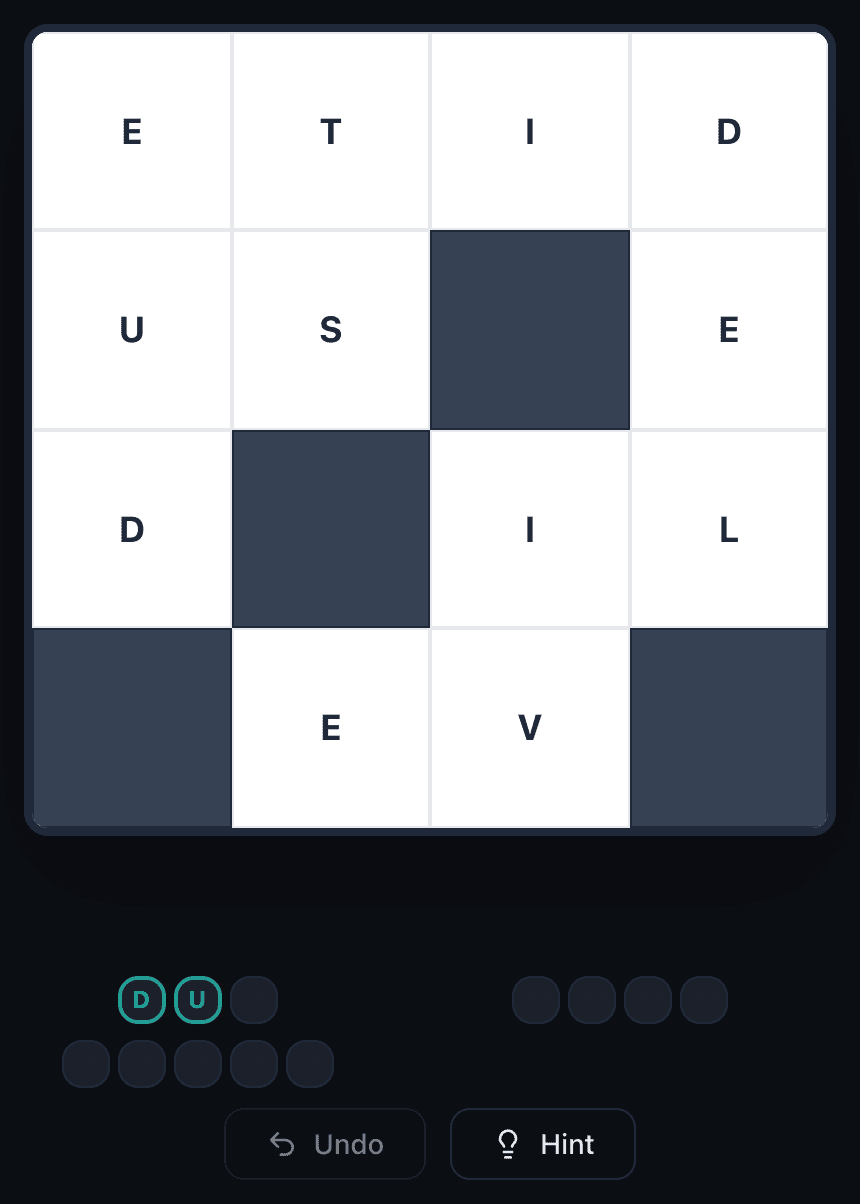
Three letters means the fewest possible routes, so it is the cheapest place to look for a forced move. There is only one u on the board, on the left edge. Two d tiles exist, but only the one directly below that u is adjacent to it, so the first two letters are settled. From the u, the only neighbouring tile that finishes the word is the e above it. One path, decided before anything was placed.
The board holds exactly one l and one v, which makes this word a chain of single options. The l on the right edge has just one i beside it; that i has the v directly below; and the v has exactly one e next to it. Four letters, no choices.
Five tiles are now unclaimed, and the last word has five letters. This is the tiling constraint paying off: you do not need to search for EDITS at all, because the shape left behind can only be read one way. Whenever the leftovers stop fitting the words you have left, the mistake is in an earlier path, not the one you are staring at.
Finding a word isn't enough. Its path also has to leave a shape the remaining words can fill. Strong players pick the word with the fewest possible routes and place nothing until it's forced.
Want the full playbook? Read the Wend strategy guide, follow a harder board solved step by step, or see how Wend differs from word search and Boggle.