Square
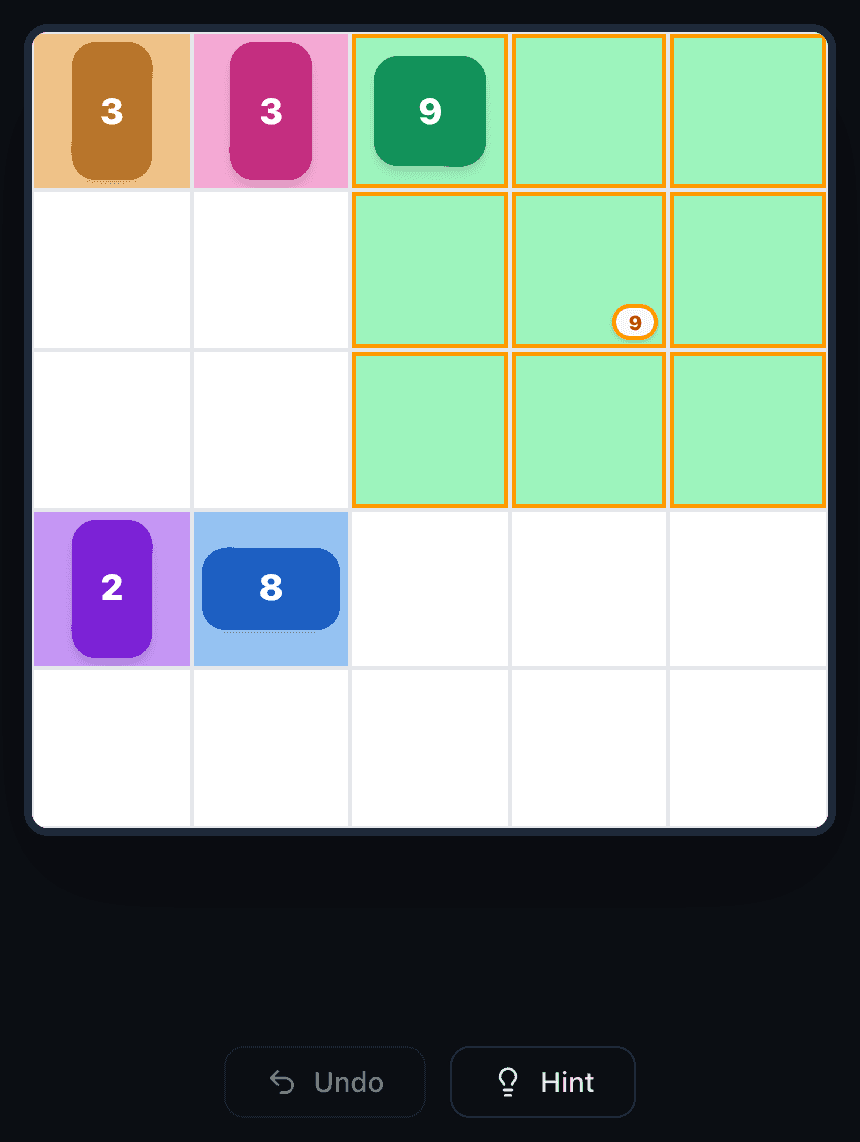
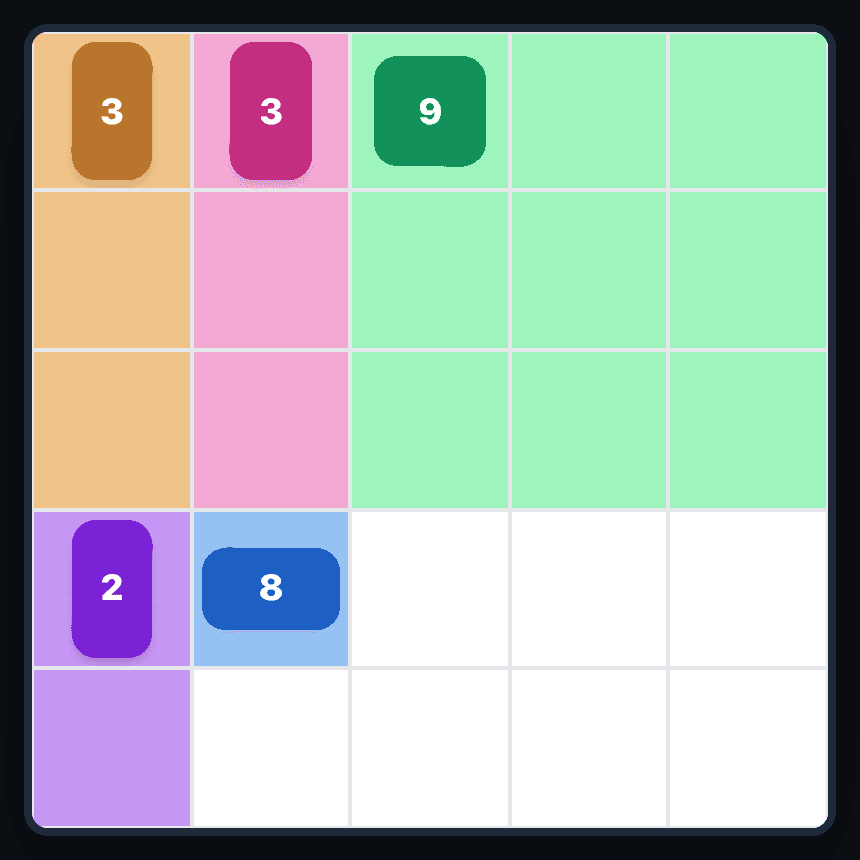
Width and height are equal. A Square 9 can only be 3×3.

Divide the whole grid into rectangles. Every rectangle holds exactly one number, and covers exactly that many cells. No gaps, no overlaps.
Play this board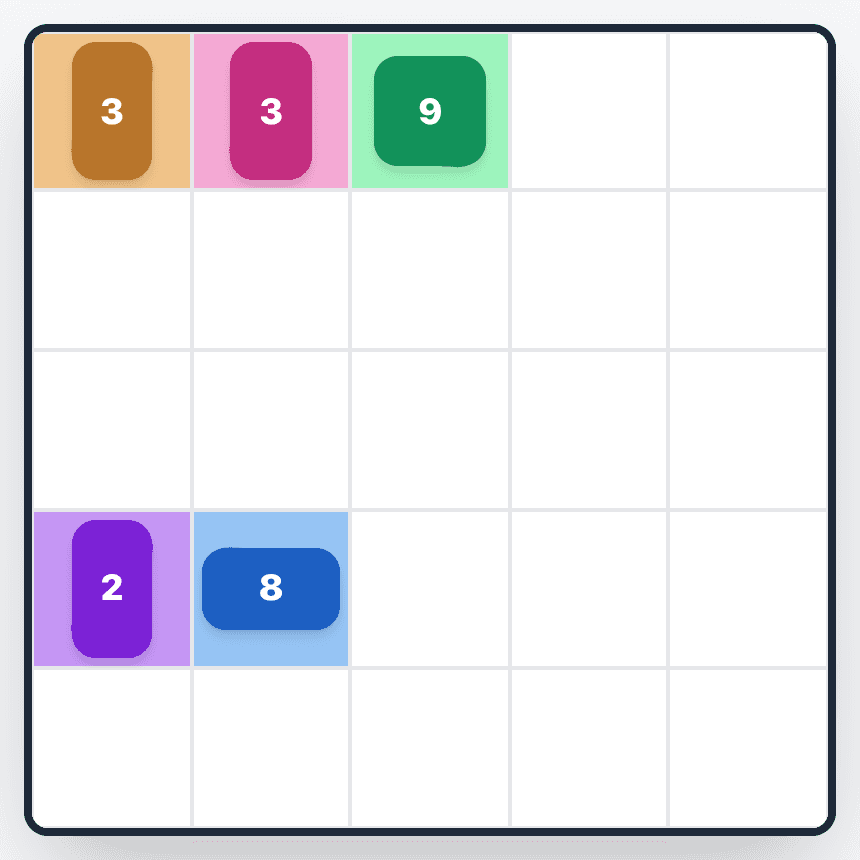
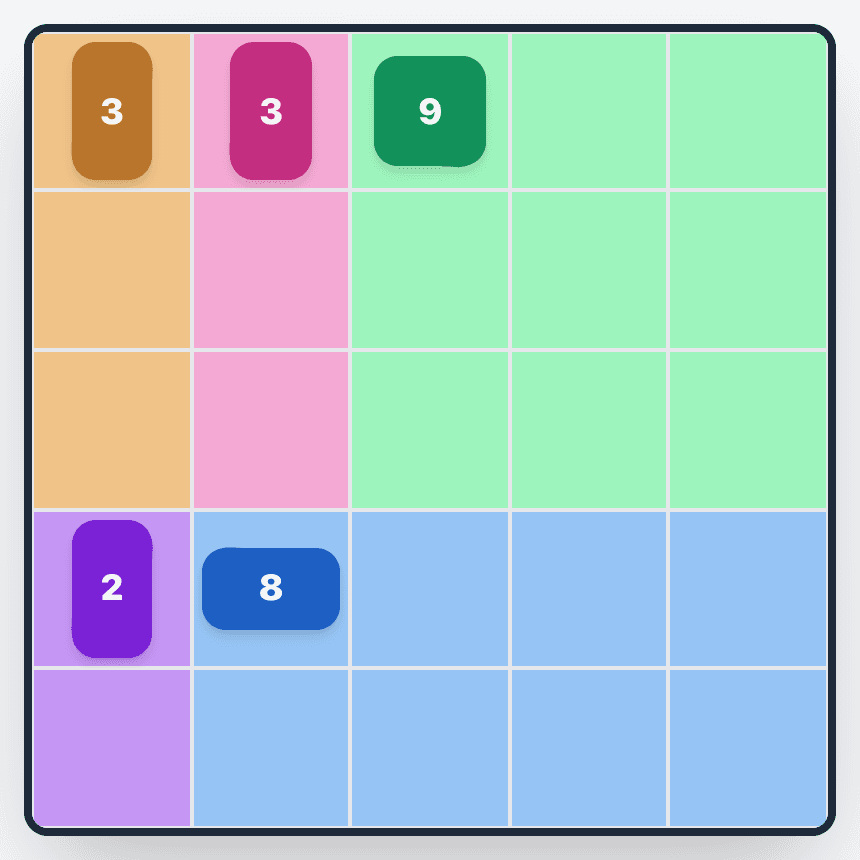
The number is the area. The shape of the chip it sits on is the second clue: it tells you the proportions of the rectangle.
Width and height are equal. A Square 9 can only be 3×3.
Height is greater than width. A Tall 3 is one cell wide and three high.
Width is greater than height. A Wide 8 can be 8×1 or 4×2, never taller than it is wide.
The plus shape means no limit on proportions. A 6 can be any rectangle of six cells.
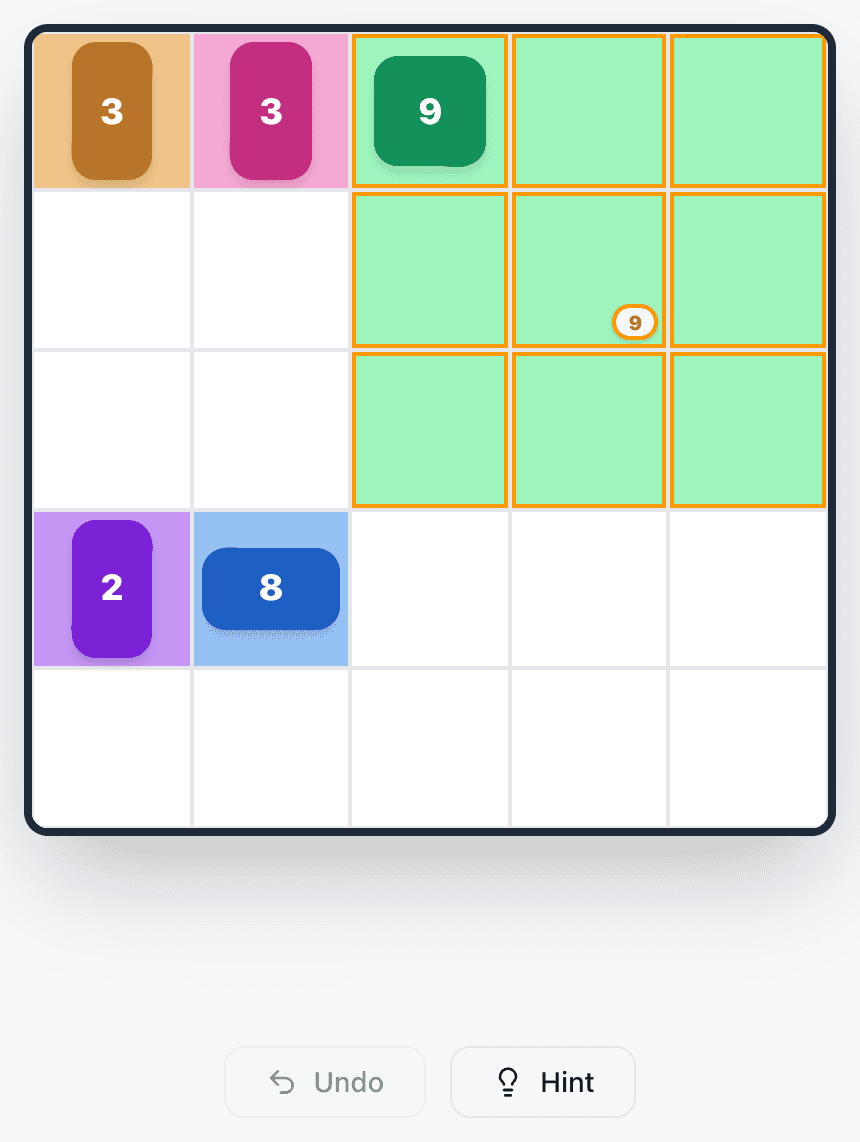
Press on a cell and drag to the opposite corner. The small counter shows how many cells you have covered. Let go to place the patch.
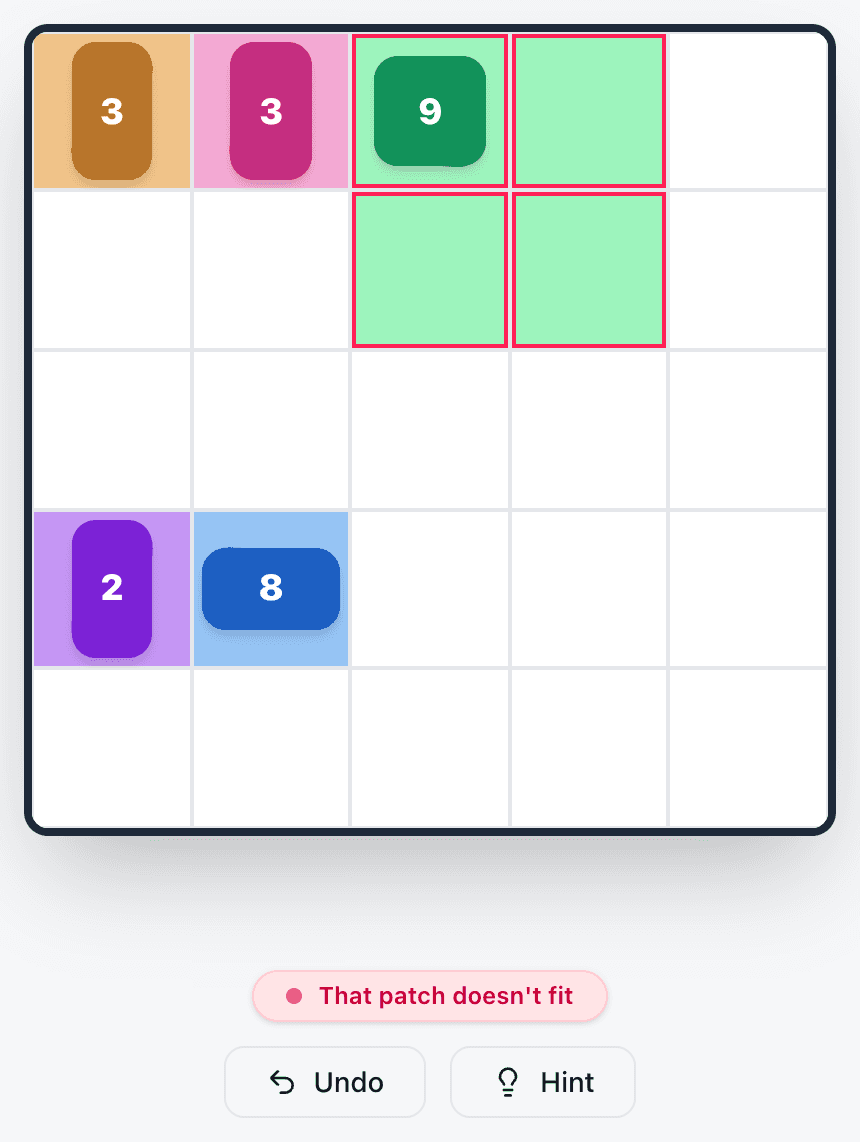
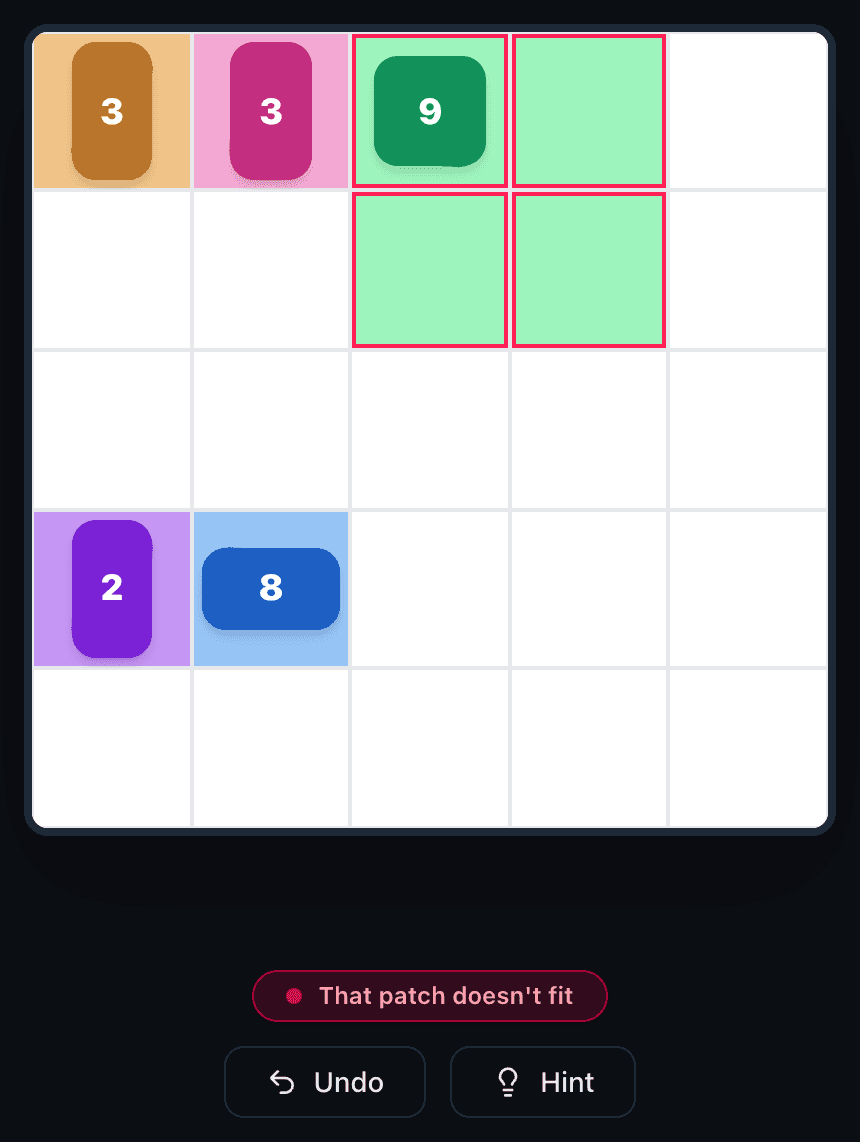
This 2×2 holds the 9 but covers only four cells, so it gets a red outline, the status line says why, and it counts as a mistake. Draw over it to replace it, or tap it to remove it.
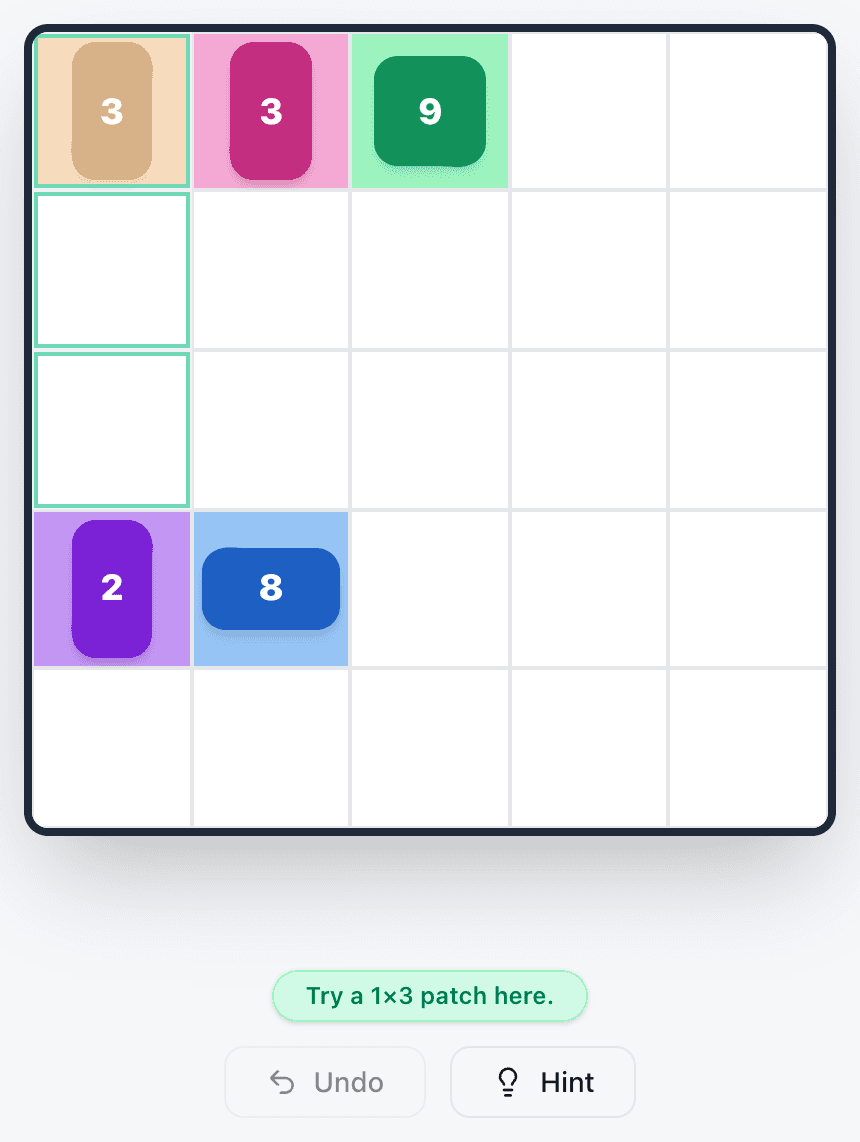
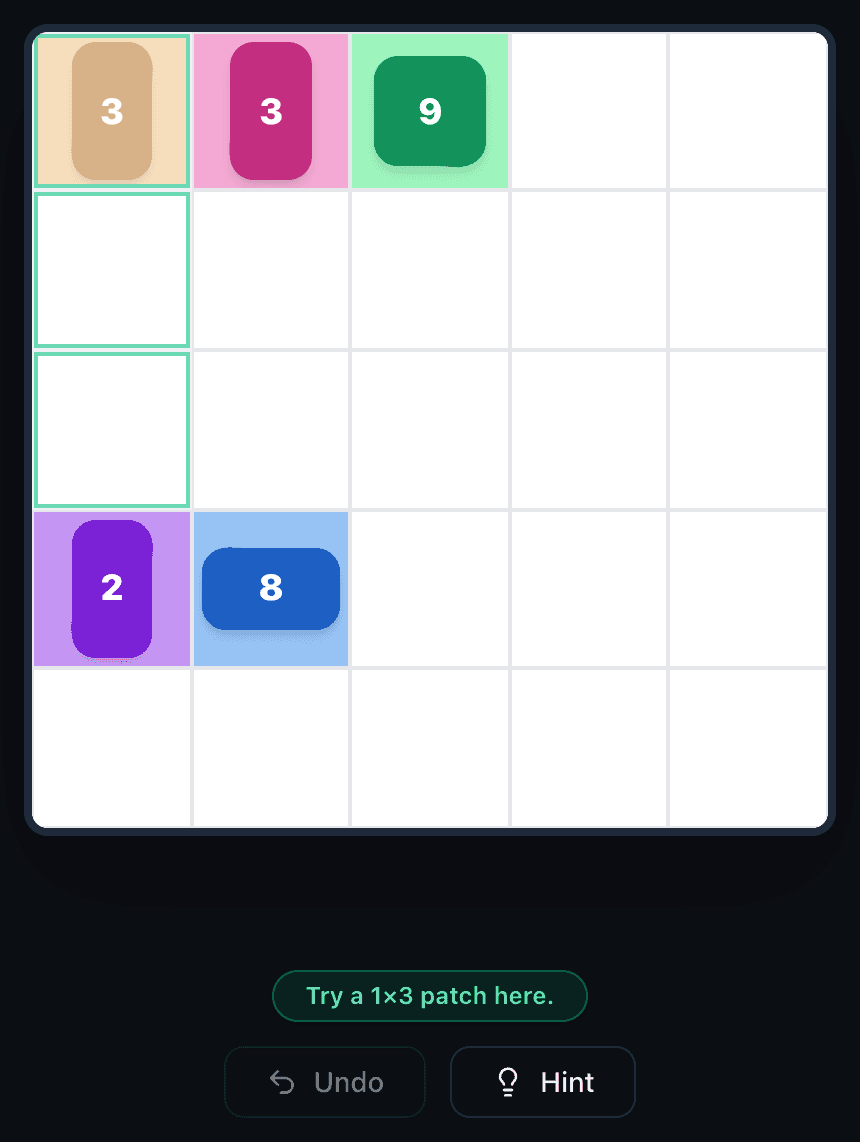
Outlines the next rectangle and gives its size, width first; press Hint again and it places the patch for you. If a patch on the board is wrong, the hint points at that one instead.
Undo takes back your last move. A rectangle drawn over an existing patch replaces it, so a wrong patch is fixed by drawing the right one.
The board is solved when every cell is covered and every patch fits its clue. You get your time, the number of patches you placed, and how many mistakes you made, then the next level unlocks.
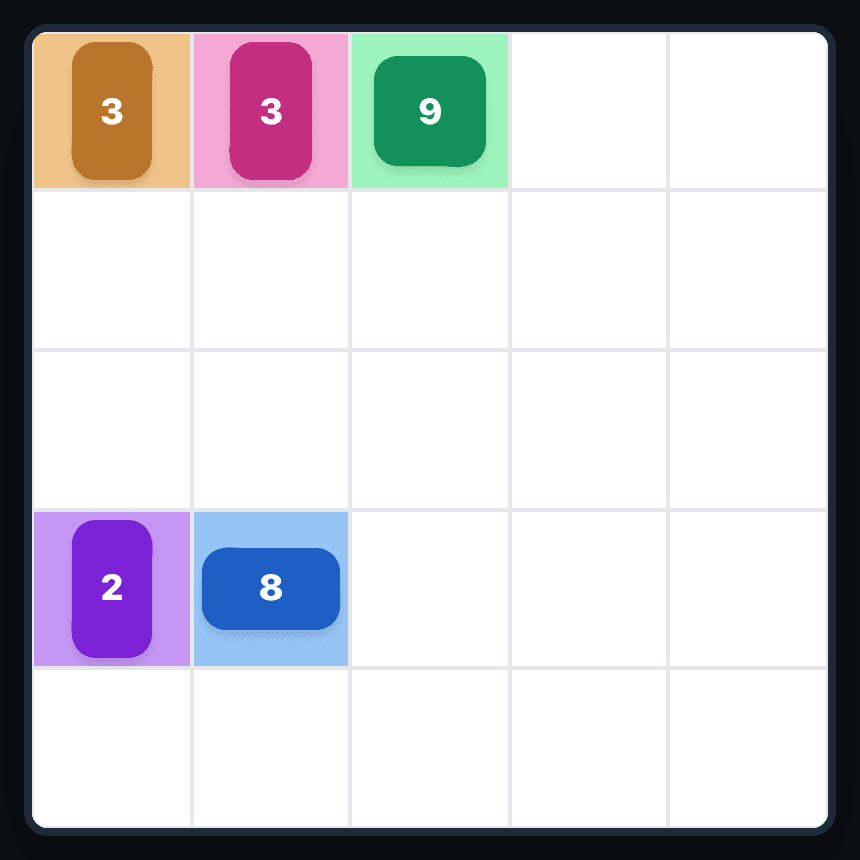
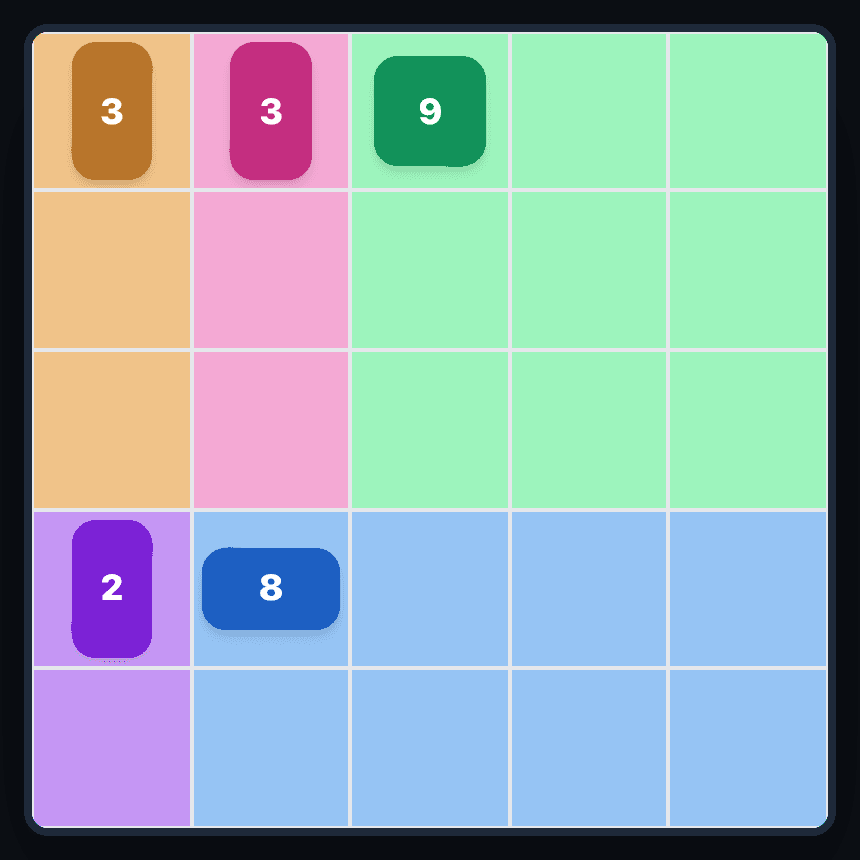
Here is a real board, Easy level 1, solved from start to finish. Five clues, five rectangles, and every step is forced: a well-made Patches board never asks you to guess.
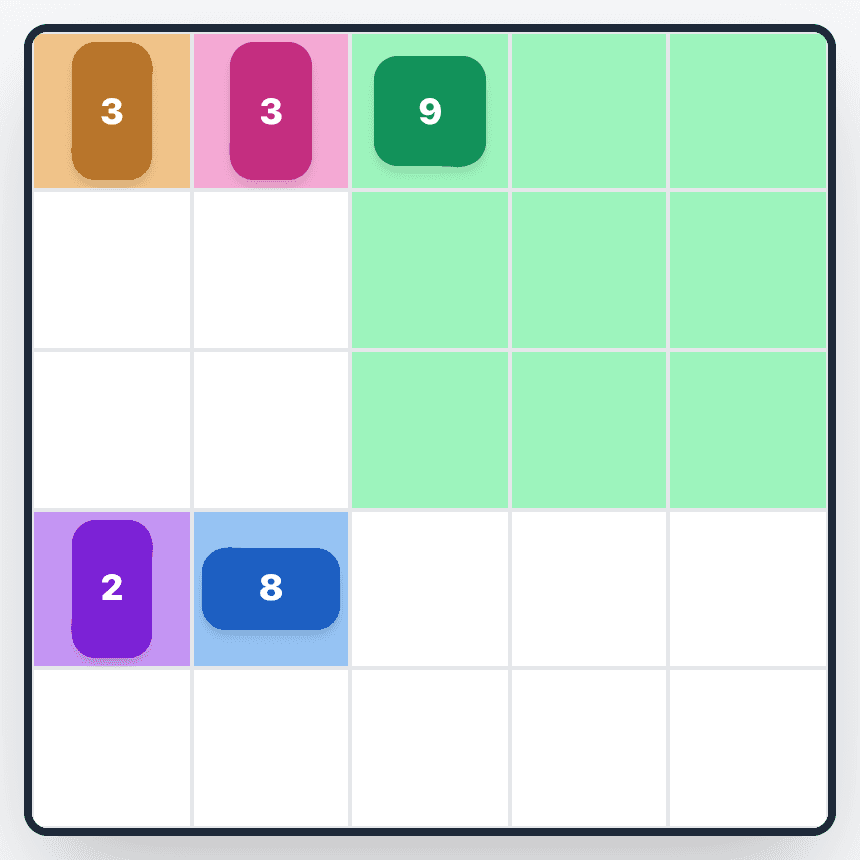
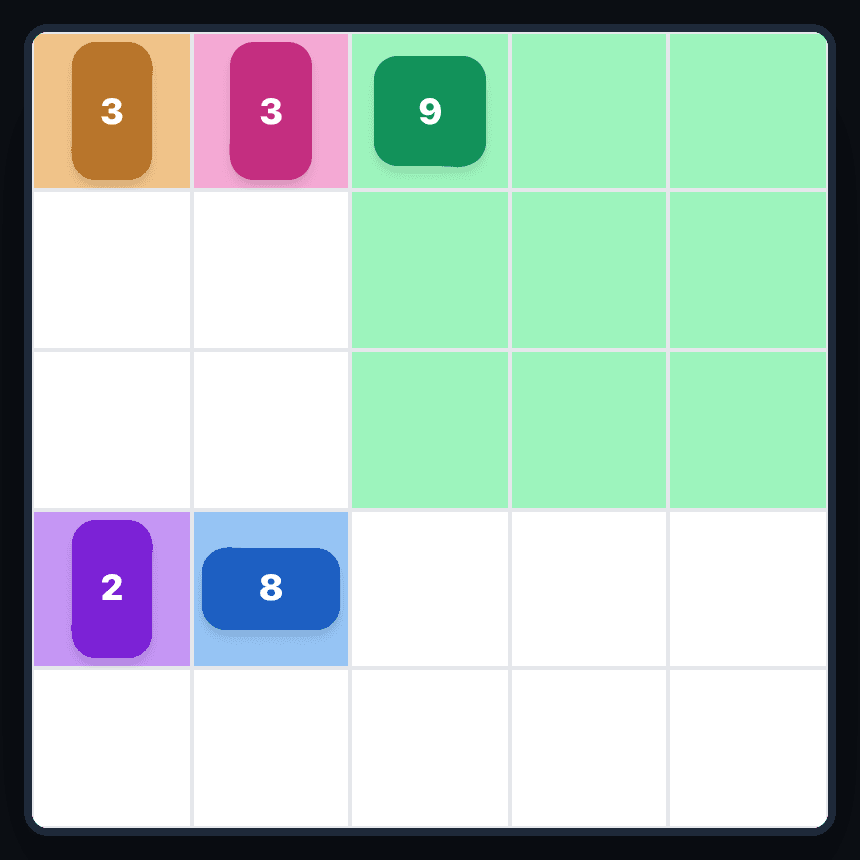
A Square 9 is 3×3. It hangs from the top row and could sit in three places, but two of them would swallow a 3. That leaves the top-right corner.
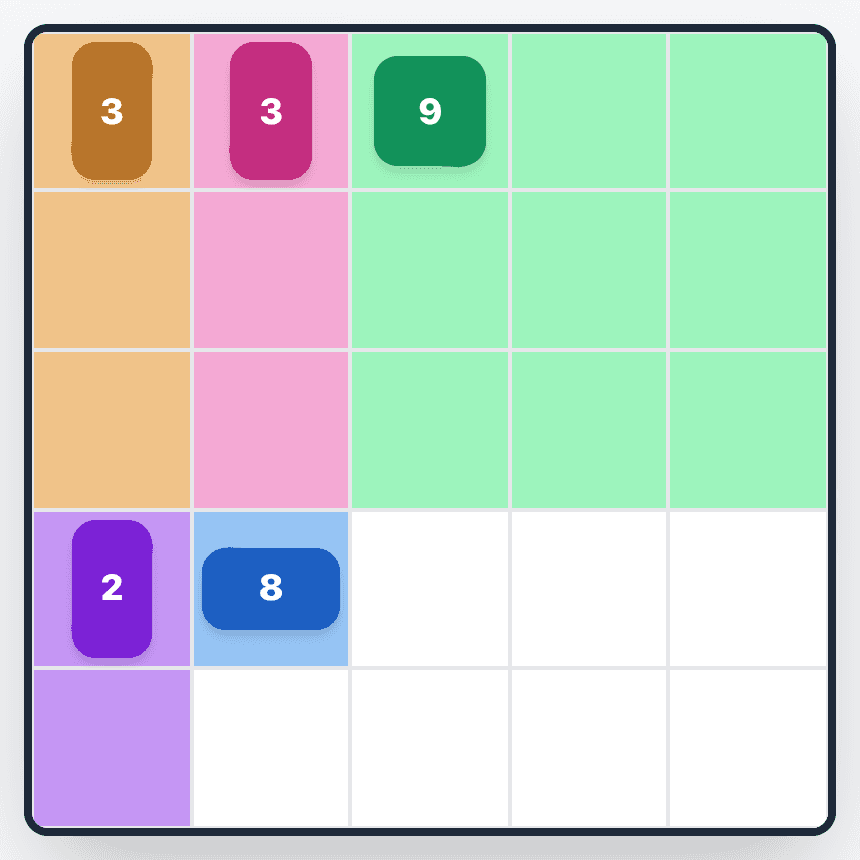
Each Tall 3 is a strip running down from the top row. The Tall 2 could reach up or down, but the cell above it is taken, so it goes down.
Eight white cells were left in one block, four wide and two high, with the Wide 8 inside. The last patch is never a decision.
The game accepts any rectangle that fits its own clue, even in the wrong place. Start with the clues that have the fewest shapes: squares, prime numbers, and anything pinned in a corner. When a later clue has no room, look back at what you placed earlier.
Want the full playbook? Read the Patches strategy guide, follow this board solved in full, trap included, or see how Patches differs from Shikaku.